
10/10/2026 by Tony Redondo
Andy Haldane, the former Bank of England Chief Economist and now President of the British Chambers of Commerce, told CNBC this week that Britain is on “thin ice”, must act to “appease financial markets”, and faces “perils” in the run-up to the Budget on 28 October.
Haldane thinks the government must curb public spending and refrain from painful tax hikes. “That is the Achilles’ heel of this government. Unless and until action is taken on that, [Prime Minister Andy Burnham] will remain, alas, in hock to the bond market.”
The irony is that Burnham, who replaced Keir Starmer as prime minister over the summer, has himself criticised UK fiscal policy as being “in hock” to bond traders. His emergence as frontrunner to oust Starmer rattled bond markets earlier this year as investors see him as far more left leaning than his predecessor.
Gilt yields have surged amid domestic and global instability in recent years, and Britain now has the highest government borrowing costs in the G7. Haldane acknowledged that international bond markets have created a “hostile environment for all government borrowers”, but said the UK is hit harder because it is “a leveraged bet on the world economy”.
“Our inflation is higher and stickier. Our growth is lower and stickier. We have yet to balance the books this century, so history is not on our side. The facts are not on our side. That’s why the ice is thin.”
Burnham has refused to rule out tax rises, and this from a Labour government that has already raised taxes by over £66bn since taking office in July 2024, against a figure of just £8.5bn promised in the manifesto for the lifetime of this parliament.
There is mounting speculation that Chancellor John Healey will hit the banks with windfall taxes on the 28th. The banks have lobbied hard against the idea. JP Morgan boss Jamie Dimon met Burnham and Healey in London last month. Haldane warned against homing in on business: “I think most would say that the great engine of growth is the private sector. But there’s a real sense within the private sector that they are taxed out. A sense we’re borrowing too much rather than too little, and therefore more of the same was not the route to growth, and I hope that’s a penny that’s beginning to drop inside government.”
He added that the government is “significantly underweight in its economic and financial expertise.”
At this week’s Conservative Party conference, surprise guest Jeremy Clarkson hit out at inheritance tax and asked: “Why would anybody set up a business in this country?” The Diddly Squat farm owner took aim at the decision to cap the 100% agricultural property relief at £1m of land and business assets, a threshold Labour ministers raised to £2.5m after a U-turn in late 2025. “I think they didn’t understand it when they introduced it,” Clarkson said. “With a farm it’s completely different because you’d have to sell a bit of it, making it even less profitable, or you’d sell the whole lot. It makes perfect sense for the way the countryside looks and our food supply system for farmers to pass it on to the only people who know how to do it, which is your kids.”
Bank of England Governor Andrew Bailey told the Istanbul Economic Forum that governments should help keep prices stable and win over markets with disinflationary tax and spending measures. Bailey, who also chairs the global Financial Stability Board said governments must commit to both price and financial stability and exercise fiscal restraint. “Whatever the stance of fiscal policy is, it must be credible and direct to that stability and seen to be as such by markets.”
My view? Healey won’t blink; politically, he can’t. After £66bn of tax rises already, a retreat now would be a confession, and no Labour chancellor wants to be seen folding in front of the banks. The bond market, though, doesn’t care what’s politically affordable.
Currency Exchange Rates Update
The Pound hit its strongest level against the Euro this week since June 2025.
The markets may be fretting about the UK’s fiscal position, but they are currently laser focused on France.
French investment bank Natixis put it bluntly in a client note, “The euro slides as European political contagion spreads. The trigger is no longer limited to France.” Add Spain, where Prime Minister Pedro Sánchez has called a snap election for 29 November, and the euro is under heavy selling pressure. It has also fallen to its lowest level against the US Dollar since May 2025, after four straight weeks of losses.
Start with France. The ten-year yield spread over Germany recently hit its widest since 2011, and government borrowing costs are now at their highest since 2002. Prime Minister Sébastien Lecornu wants to cut €54bn from public spending to bring down the deficit in the eurozone’s second-largest economy, but he faces stiff opposition from politicians jockeying to replace Emmanuel Macron in the presidential election due in April 2027.
Now Spain. Sánchez called the early vote after parliament rejected a package of measures to tackle the housing crisis that critics and opposition parties argue current government policies contributed to housing unaffordability.
Meanwhile, a quieter week for the Pound against the US Dollar, down just 0.05% and still within 0.36% from its lowest level since June.
The markets maintain expectations for a first Bank of England rate rise this year when the Bank next meets on the 5th of November amid persistent Middle East tensions. UK August GDP data release is due on Thursday and is forecast to fall while expectations of further ECB tightening have eased.
In the coming week, the key economic data releases and significant events include:
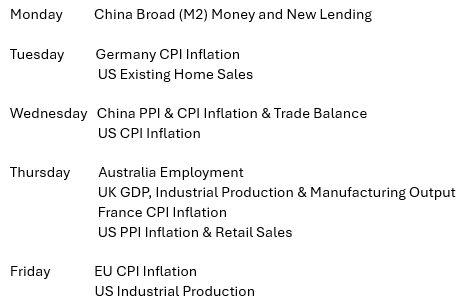
What’s in the news?
UK
Labour’s Sagal Abdi-Wali has won the Holborn & St Pancras by-election, Sir Keir Starmer’s old seat and the fallout lands squarely on Greens leader Zach Polanski. A bruising defeat, a divisive motion on Zionism that has exposed deep divisions in the party, and now mounting pressure from within his own ranks. Questions over his leadership are only getting louder.
Sir Ed Davey is in no better shape. The Lib Dem leader faces a revolt after a second frontbencher quit this week. Charlie Maynard has stood down as Treasury spokesperson after Alison Bennett resigned as care spokesperson.
Good news
Private equity giant KKR wants to invest more in UK. The US investment titan wants to invest more and expand in the UK and said it may list some businesses in London. KKR pulled out of an audacious rescue bid for Thames Water in June despite having been granted sole preferred bidder status in the spring. Reports at the time suggested that the firm withdrew amid fears that the rescue deal was becoming politicised.
Alongside the new investment in the UK, Scott Nuttall, its Co-Chief Executive Officer said that KKR was also planning to expand its 360-strong team in London, the firm’s largest investing office outside the US. “London will continue to be a very significant part of our presence. We have more than half of our people in Europe in London, and I think you will continue to see growth in London. From a smaller base, you’ll probably see faster growth in Frankfurt, Madrid, Stockholm. But we have 12 people in Stockholm. So, you’re talking about a very small base,” he added.
He insisted that the firm had not seen staff from the UK moving to other European countries following recent tax changes: “We have not seen at all an exodus of senior talent out of the UK.”
Not so good news
UK 30-year gilt yields reached 6.02% on Thursday, the first time since 1998, and nobody had to publish a mini-budget to get there. Britain is the first G7 nation to hit that level since Italy during the 2012-euro crisis. Debt servicing is already the UK’s second-largest spending item, and markets now price in four Bank of England rate rises by the end of 2027. The bond market, in other words, is not waiting for the Budget. It is pricing it. Chancellor John Healey told Labour’s conference he will meet his fiscal rules, and that debt interest now costs more than the Home Office, Defence and Justice put together.
Britain’s national debt has surged past £3tn, forcing Andy Burnham to decide how to finance higher defence spending as European governments prepare for a prolonged confrontation with Russia. The Debt Clock puts the figure at £3,025,555,371,514, roughly £15.4m every hour or £368.9m every day. Burnham has made clear that welfare cuts will not pay for the extra defence spending he believes Britain needs. That leaves the government facing one of Europe’s central fiscal dilemmas: how to rebuild military capacity after decades of constrained defence budgets while protecting ever more expensive welfare systems. The challenge is therefore broader than deciding how much to spend on defence. He must persuade voters and financial markets that he can strengthen the armed forces without letting the public finances deteriorate further.
The UK’s dominant services sector, some 81% of the economy, has shed jobs for two consecutive years, according to new S&P Global data. Higher payroll costs and the use of AI mean employers are not replacing voluntary leavers. The PMI dropped to 52.1 in September from 52.5 the month before, while unemployment has climbed from 4.2% to 4.9% over the past two years. Martin Beck, chief economist at WPI Strategy, notes that inflation risks are building, with input-cost inflation at a three-month high.
Mortgage interest costs for home movers are at their highest in 17 years, squeezing families trying to move up the property ladder. Borrowers moving home spent 14.4% of their income on mortgage interest in July, up from 13.5% a year earlier and 7.8% four years ago.
Credit card defaults rose in the three months to August, according to the Bank of England. It is a fresh sign that financial pressure on households is becoming more acute, even as mortgage and corporate defaults remain comparatively contained.
Since 2009, Britain has lost five main-fuels refineries. Every one closed with either Ed Miliband (Teesside in 2009; Grangemouth and Lindsey in 2025) or Ed Davey (Coryton in 2012; Milford Haven in 2014) as energy secretary.
Gary Smith, the GMB general secretary, called Labour’s energy policy “crazy” and warned that blocking oil and gas projects will wreck investment and trigger a fresh wave of strikes. He accused the department overseeing net zero of being “basically the ministry for P45s” and urged ministers to approve new North Sea projects or lose out on billions in investment. His intervention comes as ministers prepare to decide on drilling at the Rosebank oilfield and the Jackdaw gas field, off the coast of Scotland. The decisions rest with energy secretary Miatta Fahnbulleh. Jackdaw is widely expected to be approved, while Rosebank’s fate is less certain, although industry sources believe both will go ahead. The Labour government has delayed the announcements until the Holborn & St Pancras by-election is safely out of the way.
Energy UK, the industry body, warns the UK faces its worst winter energy crisis since Russia’s invasion of Ukraine in 2022.
Diesel prices averaged between 199.5p to 199.9p per litre, 41% above its pre-war level of 141.46p and within 1.6p of the July 2022 weekly record. Because VAT is charged on the whole pump price, duty included, the Treasury collects about 86p of every litre without announcing a thing.
Top finance industry chiefs have warned the Chancellor that raising taxes on the banking sector in the forthcoming Budget could drive businesses and capital out of the UK. The bosses of the City’s biggest industry bodies, including UK Finance, TheCityUK and the CBI, have all written to John Healey urging him not to raise the tax rate on banks.
Labour’s tax policies have driven more than £120bn out of the UK since the party took power in July 2024, according to the Bloomberg Billionaires Index. Tony Dalwood, chief executive of Gresham House, which looks after around £11bn of client money, said Britain’s taxes had become a challenge for people who want to grow businesses and create economic growth. “That virtuous circle is challenged if you start taxing and raising taxes on corporations and on private individuals.”
Royal Mail is preparing to cut up to 2,500 head office and support-function jobs by the end of 2027, as it accelerates a restructuring to cope with collapsing letter volumes and rapid growth in parcels.
Amazon has begun cutting almost 1,000 corporate roles, with UK workers among those affected. The latest round also hits the US and India, and most of the positions are understood to be in the Stores division, which runs its core ecommerce operation. Customer service and selling partner services are reportedly among the areas hit. Amazon confirmed the cuts but described them as a “small number” of roles, saying it was better aligning its store business with its priorities.
Last month, Jaguar Land Rover announced plans that could affect up to 4,000 jobs as it looks to save £1.7bn over two years. Legal & General has separately announced plans to cut around 1,000 roles by mid-2027.
USA
Stocks hit fresh records this week while the 10-year Treasury yield sat at its highest since 2002 and the American consumer propping it all up is running down savings, not earning more.
The Nasdaq Composite closed at a record 27,477.31 on Monday 5 October, up 1.05% (27,544.07 at the intraday peak), as traders looked straight past rising Treasury yields. The S&P 500 climbed 0.66% to 7,773.95 and the Dow added 90.94 points, or 0.18%, to 51,267.90. Tuesday brought the S&P’s first-ever close above 7,800, up 0.58% to a record 7,818.93, helped by tech gains and a dip in yields. The Dow gained 253.38 points, or 0.49%, to 51,521.28.
The 10-year Treasury yield broke through its 2007 peak on 1 October to its highest level since 2002. On Monday it was up more than 3 basis points at 5.311% with the 30-year up a similar amount at 5.664%. Both sit at multi-year highs.
The ISM services PMI came in at 54.9 for September, a shade below forecasts and down from 55.4 in August. Still growth, but cooling.
The fear has moved on from “higher for longer”. The Fed raised rates by 0.25% on 16 September, its first-rate rise since 2023, to 3.75–4.00% and the question now is whether there’s more to come. The New York Fed’s consumer survey did nothing to calm nerves: one-year inflation expectations jumped from 3.6% to 3.9%, the highest since May 2023, and household spending expectations reached their highest since May 2023 too. The one comfort, for now, is that five-year expectations held at 3.0%.
The markets expect the Fed to hold when it decides on 28 October, but another rate rise is not off the table.
Michael Burry reckons the grieving over the fate of the AI trade has begun. “The stock market is quite obviously in its first stage of grief, denial. Per 2000 and 2008, this stage lasts 6-9 months,” he wrote in a social media post on Tuesday. Burry is famous for shorting the housing market before the great financial crisis of 2007–09, and he’s currently short a number of AI-linked companies. He has also taken aim at Nvidia’s depreciation schedule, calling it an “admission of the dramatic cost” of the company’s product cycle and a “gift to bears”. And he thinks the institutional lenders funding the tech build-out could be in for a rude awakening: “The captive insurance companies of the big PE firms are likely to get into trouble with these data centre loans and data centre bonds,” he wrote in a 1 October newsletter.
Martin Armstrong of Armstrong Economics argues that Americans are spending more because everything costs more. Economists keep pointing to consumer spending as proof the economy is strong, and August’s 0.9% jump (0.6% after inflation) is being celebrated as the resilient American consumer. But real disposable income did not increase at all, and the personal saving rate fell to just 4.1%. Households are holding their standard of living together by running down savings.
Consumer prices are roughly 30% higher than at the end of 2019, something that cost $100 then costs about $130 now. Lower inflation only means prices are rising more slowly from an already elevated level.
That’s why confidence can collapse while spending holds up. The Conference Board’s Consumer Confidence Index plunged to 81.9 in September, it’s lowest since 2014, below even the pandemic low. The University of Michigan’s sentiment index fell to 48.1, a four-month low and 15% below January. People keep spending because they have to keep living; they’re just increasingly worried about what comes next.
Gallup’s numbers say the same thing. Only 44% of 18–29s describe their lives as thriving, against 45% of 30–44s and 46% of 45–64s, no better than during the 2008 financial crisis. The declines appear tied to rising rates of depression, among other factors. Only the over-65s are doing better than ever, largely down to satisfaction with their economic situation. It underscores the relative dissatisfaction among key age groups ahead of the midterm elections due on the 3rd of November.
Kpler data put the seven-day average for oil clearing the Strait of Hormuz at 14.19 million barrels a day, closing in on the pre-war baseline of 17.13 million. Most of what’s still missing is Iranian oil, stopped by the US blockade. Saudi crude is flowing again through its bypass pipeline and loadings at Yanbu on the Red Sea are picking up which should free up more exports.
The EU
Eurostat’s flash estimate has eurozone inflation at 3.8% in September, nearly double the 2% target, and the highest reading since September 2023. Core inflation is 2.5%. The ECB announces its next rate decision on 29 October.
German industrial production jumped 2% in August against a consensus of 0.5%, and there’s more good news for the beleaguered Chancellor, Friedrich Merz: Berlin has lifted its 2026 GDP forecast from 0.5% to 1.3%. German exports rose 3.7% in the first half of the year. This is good news for the whole bloc. Lacklustre by global standards, but a long way above earlier estimates and Berlin expects 1.1% in 2027 with the Iran war taking less of a toll than feared.
EU gas storage is at a record low for the time of year at roughly 73% full and prices are rising coming into winter. The question is when a price problem becomes a supply problem.
The AfD in Germany and the RN in France threaten to push the traditional parties to extinction. The AfD has just won its second state election in as many weeks, topping the poll in Mecklenburg-Vorpommern on around 38%. Merz’s CDU was wiped out: 4.9% on preliminary figures, just under the 5% threshold, the first time it has ever missed it at a state election. It’s part of a wider trend of centre-Right parties being squeezed out by insurgents across Europe. Right-wing parties have also won elections or made substantial gains in Austria, Finland, France, Italy, the Netherlands and Sweden.
Even by French standards, this week’s protests were dramatic: more than 250,000 students, teachers and trade unionists on the streets on Tuesday, facing riot police and tear gas. One high-profile figure wasn’t among them. Marine Le Pen spent the day briefing journalists on how, as president, she would find €140bn of net savings by 2032. That’s a watershed for a populist who has always leaned towards fiscal largesse and opposed Macron’s fiscal reforms at every turn. Now she’s trying to outdo Prime Minister Sébastien Lecornu, whose €43bn of new cuts and tax rises, inside a €54bn package look modest by comparison.
Both now answer to two masters: the angry crowds on the streets and the anxious bond investors voting with their feet. French ten-year yields touched 4.99% on 1 October, a 24-year high. France has run a deficit every year since 1974, but the acute phase began in mid-2024, when Macron’s snap election backfired and delivered a hung parliament dominated by populist blocs. The only thing those MPs agree on is blocking Macron’s hapless succession of centrist prime ministers from tackling the debt.
France was the big loser from the bond scare. The 30-year gilt broke 6% on 1 October for the first time since 1998 and the premium over the German Bund hit 1.3%, the widest since 2012, when the eurozone was deep in its Greek-led debt crisis. That gap is shorthand for credit quality: Germany the safest in the eurozone, France among the weakest. Debt is about 119% of GDP, better than Italy, much worse than Germany. What really worries investors is the direction of travel: a deficit forecast at 5.4% of GDP this year and 6.5% next year unless cuts and tax rises go through. That is far from certain. Parliament missed its budget deadline last year and the year before, and this year looks the same. Lecornu’s €54bn package would cut the deficit to 5%, and he has warned that failure would put market confidence in question.
Australia
Australia’s services PMI slowed from 53.2 in August to 51.9 in September, although that was stronger than the preliminary estimate of 51.4. Growth in new business eased and employment fell for the first time since May, while cost and selling-price pressures intensified. The composite PMI slipped from 52.7 to 51.3 as manufacturing weakness continued. It’s a mixed picture and a headache for the Reserve Bank of Australia, with growth slowing even as inflation pressures stay elevated.
Ratings agencies, S&P Global among them, have flagged the growing burden of servicing government debt. Treasurer Jim Chalmers signalled that global shocks may force fiscal restraint in upcoming budget revisions. Inflation remains elevated near 4.0%, unemployment is around 4.6%, and annual growth has slowed to 2.1%.
Australia’s High Court sided with environmental activists this week in a landmark ruling: regulators must now consider emissions generated by Australian coal burned overseas, the so-called “scope 3 emissions”. In plain English, when a Chinese factory burns Australian coal, those emissions count when approving a mine in Australia. The case centred on the proposed expansion of the Mount Pleasant coal mine in New South Wales, where scope 3 emissions would account for a whopping 98% of the project’s total. Mining makes up about 12% of Australian GDP, and the industry has warned the decision could deter investment. Australia is the world’s second-largest coal exporter, earning $70 billion a year and the ruling exposes the tension between that dependence on fossil fuels and its climate commitments. The government is working towards a 43% cut in greenhouse gas emissions by 2030 and net zero by 2050.
Canada
Canada would rather fight Trump than trade with him. Carney’s refusal to strike a deal makes no economic sense, but the talk of a 51st state has turned trade into a question of national identity, and both countries are now playing a back-and-forth game of tariffs, counter-tariffs and import bans. Canada has more to lose than most. Three-quarters of its trade is with the United States, and the two economies are deeply integrated, by some measures, more so than the UK and Ireland. Everyone agrees a trade war will hurt consumers. Yet when Carney walked out of negotiations on 21 August, he was hailed as a hero. His popularity has never been higher.
What’s changed is Trump’s rhetoric. Whether he’s serious or joking is beside the point. It’s the loudest talk of it since James K. Polk, who was elected in 1844 on a platform of annexing territory that is now British Columbia. And it touches a nerve, because Canada exists precisely so as not to be the US.
Walking away from a deal was the easy choice politically, but it has painted Carney into a corner. It’s well known in Ottawa that he personally wants some sort of deal, and he knows better than most what a trade war costs. But his popularity rests on standing up to Trump, and any conceivable deal will mean concessions. Any deal imperils that popularity.
Carney’s answer is diversification, that Canada should trade away from the US. Hence his seemingly inevitable presence at any gathering of European heads of government. On the surface, it makes sense. In practice, it’s immensely difficult and painfully slow.
More than 90% of Canadians live within 250km of the world’s biggest market. Trading with anyone else takes far more effort, time and money. It isn’t just the size and proximity of the US but how tightly the two economies have knitted together. Car parts for a single vehicle may cross the border several times during manufacture and assembly. Businesspeople in Toronto are as likely to take a meeting in New York as in Montreal or Calgary.
Europe looks like the obvious new best friend, and the EU has offered Canada “associate member” status, a first. But the practical barriers are real. Jacob Jensen of the right-leaning American Action Forum says the desire is there, but it will take “numerous years” before it becomes anything meaningful. Philip Luck of the Centre for Strategic and International Studies reckons distance and regulatory differences mean the impact on trade will be “relatively minor”.
Meanwhile, the new tariffs, on everything from electronics to paper to home appliances will make life dearer for Canadians already struggling with the cost of living. An economy teetering on the edge of recession does not need another hammer blow. For border communities in the integrated manufacturing economy, it’s far worse. Faced with tariffs and uncertainty, factories will start moving to the US and those jobs won’t come back when the trade war ends. Meaningful diversification is a decades-long process at best.
September’s Labour Force Survey showed a sharp loss of 68,300 jobs, driven mainly by a 70,000 fall in public sector roles across education, healthcare and social assistance.
The Bank of Canada’s policy rate has been on hold since October 2025 at 2.25%. Economists are debating what the Bank of Canada will announce when it next meets on the 28th of October given oil price swings and trade pressures.
Defence Minister David McGuinty joined Premier Danielle Smith in Alberta to announce $8bn in ongoing federal military spending, including $550m for an Air Force base expansion in Edmonton. The visit comes ahead of Alberta’s 19 October referendum, which includes a question on remaining in Confederation versus a binding separation vote.
Others
China’s latest stimulus, the biggest since September 2024, is aimed at stabilising growth, not reviving it. Investment spending is the centrepiece, with fiscal policy expected to do the heavy lifting. But investment remains subdued outside favoured high-tech sectors, and private spending has collapsed amid weak confidence and squeezed profits, leaving China leaning on exports to keep growth going. The measures include mortgage subsidies, expanded central bank lending quotas for infrastructure and technology, and a 0.25% cut to the rate on pledged supplementary lending. Analysts call it a nudge, not a turning point. Modest support won’t fix sluggish domestic demand, local government debt pressures or the property slump, which keeps suppressing both investment and consumption.
China closed a record 670 banks last year, nearly one in four lenders, as Beijing pushes to de-risk amid slowing growth. Almost all were rural banks, which “remain the weakest part of the system, with poor asset quality, low capitalization, and governance shortcomings,” according to Fitch. After a massive credit expansion drove growth, “the financial system’s problems now constrain that growth,” a Rhodium Group expert told ChinaTalk.
Gulf sovereign wealth funds are on track for one of their busiest years of dealmaking ever, even as war disrupts businesses and economic growth. Regional funds are forecast to invest $136 billion by year-end, making 2026 their second busiest on record, according to consultancy Global SWF.
Brazil’s presidential election goes to a runoff on 25 October after conservative challenger Flávio Bolsonaro unexpectedly emerged as the favourite in the first round. Polls seesawed in the runup as Bolsonaro, whose father was banned from running after leading a coup attempt, and left-wing incumbent Luiz Inácio Lula da Silva traded corruption allegations, the issue that defined the race. A Bolsonaro win would confirm Latin America’s rightward shift with the seven most recent elections in the region have all been won by conservatives, most of them friendly to the Trump administration and its ambition of reasserting hegemonic power in the region to counter China’s growing influence.
Stranger than fiction
The space race has found a new obsession, putting nuclear reactors on the Moon. The US wants one up there by 2030. Russia and China, working together in a deliberately opaque partnership, are aiming for 2036, according to The New York Times. The reason? Reactors don’t need sunlight. That matters when you’re sitting through a lunar night that lasts roughly two weeks.
California start-up Atoco, founded by a Nobel Prize winner, is building machines that harvest water from the waste heat of AI data centres. Given how much water these facilities guzzle, it’s a neat idea, though the proof will be in the economics at scale, not the press release.
Researchers have found that vanillin, the compound in vanilla pods, has antibacterial, anti-inflammatory and antioxidant properties, enough to help heal wounds, treat ulcers and deliver drugs.
Quote
American showman, businessman, and politician celebrated as a pioneer of modern mass entertainment, publicity, and promotion, P T Barnum, “Money is a terrible master but an excellent servant”