
07/11/2026 by Tony Redondo
UK house prices are forecast to dip around 1.5% into 2027 (Savills), while EU prices are up 4.7% year on year (Eurostat), and the Pound is trading near its strongest against the Euro since March 2025, but an early general election or a spooked gilt market, and that lead is gone. Here’s what that means if you’re buying, selling or renting property overseas.
If you’re moving money across borders for property, the timing matters. Here’s where each market stands.
Welcome to the newly updated weekly briefing. We’ve streamlined the format, sharper, tighter and directly relevant to you.
At Cosmos, we provide our clients with tailored currency payment solutions in three main areas. Each week, we zoom in on one where currency decisions matter most: Property , Probate and in Business. Once a month, a Guest Blog from trusted professionals in our network joins the mix.
Don’t take my word for it — see how we’ve done it for real clients.
My aim hasn’t changed. Honest, plain-English insight, minus the noise, so you can make cross-border payments with confidence.
This week, we focus on Property. This is for you if you’re buying, selling or renting property overseas.
UK
Affordability has split the UK property market this past week. Mortgage rates are elevated and rising, the cost-of-living pressure hasn’t eased, so the whole market remains price-sensitive, but performance varies sharply by region and buyer type.
Friday’s Lloyds House Price Index shows average prices fell by 0.6% in October, taking the annual decline to 1.2% as the market suffers a distinct lack of momentum. Savills has updated its medium-term forecasts, and they make for sober reading: a modest dip of around 1.5% into 2027, with a full recovery pushed back to the second half of 2028. Prolonged high borrowing costs and anaemic economic growth are keeping a lid on any rapid growth.
Agents report a widening regional divide. London and the Southeast are under the most pressure. Higher base values mean mortgage-rate sensitivity bites harder, and asking-price cuts and longer days on market are increasingly common. In contrast, the Northeast, Northwest, Wales and parts of Scotland are still posting modest annual growth. Relative affordability does the work there: buyers’ incomes stretch further under current lending criteria.
Choice is at its highest for this time of year in nearly a decade. With stock up, buyers have the upper hand in negotiations, and sellers are having to price realistically from launch.
One for the family-home planners. Does gifting property beat inheritance tax? The Express takes a look. If the property sits overseas, best take tax advice in both countries before you move a penny.
https://www.express.co.uk/finance/personalfinance/2260935/does-gifting-property-beat-inheritance-tax
The EU
Across the EU, the data points to a two-speed recovery. Stubborn borrowing costs and high construction costs are still dragging on commercial property and the core central European markets, yet residential demand across Southern and Eastern Europe is holding up far better than anyone had a right to expect.
Eurostat’s official figures put EU house prices up 4.7% year on year, with Portugal, Bulgaria and Lithuania out in front on double-digit annual gains. Rents are climbing in nearly every Member State (up 3% on average EU-wide), with the sharpest pressure in Croatia, Slovenia and Romania, which is feeding straight into the European Parliament’s ongoing rows over affordable housing and speculation controls.
At the other end, high interest rates and squeezed purchasing power have left price growth flat or negative in Finland, Luxembourg and France.
Germany, after a notable price correction, is stabilising, helped by a modest pickup in infrastructure and defence spending. But new residential construction is still severely constrained by material and labour costs, and that won’t fix itself quickly.
Spain. Housing has officially become the top public concern in Spain driven by steep affordability challenges, tight rental inventory, and quality issues such as poor insulation. Recent figures reveal a drop in foreign property acquisitions across popular regions like the Balearic Islands and Valencian Community. High per-square-meter prices mean total foreign purchase volume has fallen, even though premium international buyers, notably from the US, Sweden, and Germany continue to pay top-tier rates.
Italy. Nationwide property indices show Italian residential asking prices reaching all-time highs, up ~5% year-over-year. Premium waterfront and resort locations, including Sardinia’s Costa Smeralda and the Ligurian coastline continue to draw strong demand for luxury villas and prime apartments, contrasting with slower activity in inland rural regions.
USA
The US property market is caught in a squeeze of elevated borrowing costs, building inventory and sharp regional divergence. The average 30-year fixed mortgage rate is stuck at around 7.2%–7.3%, and buyers have stepped to the sidelines. Pending home sales are down over 10% year-on-year, one of the sharpest drops in recent years. Meanwhile, over 90% of existing homeowners hold a mortgage below today’s market rate, so new listings are going nowhere. Why would anyone swap a sub-4% mortgage for 7%+? Most won’t.
Active inventory is up roughly 6.8% year-on-year, but don’t mistake that for a flood of new supply. It isn’t. Homes are simply sitting longer because demand is weak. Median asking prices are down about 2.3% nationally, and sellers are being forced to rethink their expectations.
Beneath the national numbers, the picture splits. Affordable metros in the Midwest (Grand Rapids, Cleveland, Akron) and parts of the Northeast, such as Rochester and York, are seeing single- to double-digit price growth off low entry costs. The high-cost western markets and over-extended Sunbelt metros? Stagnant or slightly lower. Stretched loan-to-income ratios in California and Texas continue to cap local purchasing power.
Florida. Realtors’ September data shows median prices broadly steady, inventory tighter than a year ago and the top end still performing well. Months’ supply of single-family homes fell from 5.1 to 4.4. The pain is in pockets, not the whole state.
Australia
Australia’s property market is splitting into multiple speeds, and the gap is widening. Elevated RBA (Reserve Bank of Australia) cash rates, investor tax changes and tight borrowing limits have dragged the national average lower, while opening up a stark divide between the capitals.
The latest core index shows national dwelling values down around 1.2% over the past month. Repeated rate hikes this year have hammered buyer sentiment, and leading bank forecasts now point to a peak-to-trough fall of as much as 14–15% before the market finds a floor. Transaction volumes and auction clearance rates have softened, days on market are rising, and buyers are running into tougher debt-to-income stress tests from lenders.
The high-value, debt-heavy eastern markets are taking the brunt. House prices are down roughly 8% over the year in Sydney and 7.2% in Melbourne, and in some segments that’s back to 2021 levels. Smaller capitals are better insulated, thanks to lower entry prices and sustained interstate migration. Perth leads the country with annual house price growth of around 7.7%, while Hobart and Darwin remain in positive territory.
Canada
Canada’s housing market is really two markets under one flag, a balanced national picture masking a steep regional split. The expensive coastal and big-city centres are stuck in buyer hesitance, while the interior provinces keep soaking up demand.
The national numbers show prices have drifted down 1.6% to 3.4% year on year. The sales-to-new-listings ratio sits near 48.8%, with about 4.9 months of inventory, balanced, by any textbook definition. Buyers are under less pressure to move, and days on market are stretching across the key provinces. Fixed mortgage rates hovering around 4.5%–5% are capping purchasing power, and with stress-test requirements this strict, buyers have little room to adapt.
The pain is concentrated at the top end. British Columbia and Ontario have tipped into buyer’s market territory, with listings piling up in Toronto and Vancouver while sales trail last year. Buyers chasing affordability are heading inland and east. Alberta (+4.8% YoY), Manitoba (+7.2%) and Newfoundland & Labrador (+7.0%) lead price growth, helped by steady interprovincial migration.
Dubai
The market has moved into a more balanced phase. Buyers now hold the upper hand in prime secondary areas, with room to negotiate below asking, while high gross yields in affordable-to-mid-tier districts keep the long-term investment case intact. Ready homes are where the action is. October ready-apartment sales jumped more than 25% month-on-month to roughly Dhs5.3 billion, one of the strongest months for completed units this year. Off plan, by contrast, has cooled sharply. The premium over ready properties has narrowed to around 8%, down from over 21% a year ago. Investors are choosing assets they can use now over speculative future handovers.
Prices have stabilised. CBRE and local index data show average residential capital values down about 1% year-on-year, but broadly steady from the third quarter into October but rents are down roughly 7% year-on-year. New leases slipped around 5.8% on the back of substantial handovers due in late 2026, though renewal rates held firm.
Jumeirah Village Circle (JVC), Business Bay and Liwan led ready-apartment transaction volumes.
At the very top, Palm Jumeirah dominated ultra-luxury activity, with ready transactions of Dhs55 million and Dhs53.7 million.
South Africa
Annual house-price growth nationally has slowed to between 4.7% and 5.1%. Nominal values are still rising, but the pace has eased, and affordability constraints are keeping buyers on the sidelines. Strength in the market is being underpinned by a thin development pipeline. Residential building approvals rose around 17.4%, yet completed units fell nearly 3.7% so supply is tight in the short term, and that’s what’s stopping broad price falls.
Regional divergence remains stark. The Western Cape continues to lead the country on both house-price growth and rental escalation, with rental inflation at around 5.9% against a national average of 3.9% Beyond the big metros, non-metro districts, the Cape Winelands, Overberg, the KZN North Coast and the Garden Route are posting high transaction values, driven by inland-to-coastal “semigration” and second-home demand.
Developers are responding. Approvals favour townhouses and compact units under 80m², a clear pivot towards lower entry-price points. Buy-to-let interest is leaning the same way, towards student accommodation and compact urban units, where gross yields are outperforming traditional single-family suburban rentals.
Currency Exchange Rates Update
Pound/Euro
The Pound hit its highest level against the Euro on 30 October, the best since March 2025, but ended the week marginally down against the single currency. Since the 2016 Brexit referendum, there have only been four other occasions when the Pound to Euro rate has been this good.
As expected, the Bank of England raised its base rate on Thursday, the first increase since August 2023, from 3.75% to 4%. The surprise was in the vote. After consecutive 6-3 votes to hold rates in the previous two months, today’s decision came in at 8-1 in favour of the 0.25% rise, with Catherine Mann the lone dissenter, voting for a bigger 0.5% move. This could give the Pound fresh momentum in the near term.
Thursday’s BoE announcement gives the Pound a considerable 1.5% carry advantage over the Euro, with the ECB holding eurozone rates unchanged last week. Add market concerns over the French debt mountain, which won’t change until Paris gets its public finances in order, unlikely before the second quarter of 2027 at the earliest, with Presidential elections due in April. The spread between French and German 10-year bonds stood near 175 basis points in late October, closing in on the 2011 high of 190. A crucial French parliamentary vote on the budget is due on 17 November.
However, UK growth remains anaemic and public finances are stretched, just not as stretched as the French, at present. Eurostat reported euro area annual inflation accelerated to 4% in October, up from 3.8% in September and 3.2% in August, lifting the odds of an ECB hike of 0.25%, from 2.5% to 2.75%, at its 17 December meeting to 88%.
Pound/US Dollar
The pound hit a seven-week high against the US dollar on Wednesday after the Democrats swept Congress in Tuesday’s midterm elections, but it was short-lived. Thursday’s stock-market rout and Friday’s much better-than-expected employment data reversed the markets with the Dollar hitting an 8-day high against the Pound by the end of trading.
In the Senate, the Democrats flipped seven Republican held seats including Kansas for the first time since 1932 to take majority control. In the House, the Democrats crossed the 218-seat threshold to reclaim the majority. They also notched historic wins in gubernatorial and state-level races across multiple regions.
Thursday saw the tech-heavy Nasdaq drop more than 5% and the S&P500 drop 3% as a chip selloff bled into other sectors of the economy. Nasdaq 100 stocks shed roughly $2 trillion of market value. Investors concerns centre around a possible slowdown in the AI buildout after tech sceptics swept to power in Texas, Georgia, and Ohio, which account for some 40% of planned US data centre capacity.
October’s jobs report came in much stronger than expected with payrolls rising by 165,000 versus the Dow Jones consensus of 59,000. The unemployment rate also fell from 4.2% to 4.1% and there were also big upward revisions to the August and September reports.
The odds of the Fed raising US interest rates when they next meet on the 9th of December have increased from 50% to 75%.
Pound/Australian Dollar
The Pound has enjoyed a terrific week against the Aussie, gaining 2% to hit its best level since February.
The drivers include a clear divergence in monetary policy expectations and shifting risk sentiment.
Both the Bank of England and the Reserve Bank of Australia raised rates by the same 0.25% amount this week, but the message from each could hardly have been more different. The BoE’s rise on Thursday was read as hawkish with the markets already pricing in a 50% probability that the BoE will raise UK interest rates again when they next meet on the 17th of December. In complete contrast, the RBA’s move on Tuesday, taking the cash rate to 4.85%, was read as dovish, with forward guidance suggesting the tightening cycle has likely peaked.
The Aussie was also dragged lower by weaker-than-expected Chinese credit expansion and persistent weakness in the property sector and market sentiment that turned negative with the global stock market rout that started in New York.
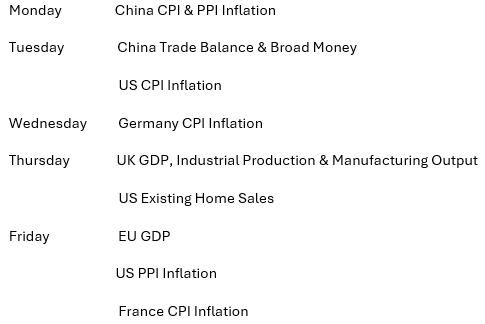
In the coming week, the key economic data releases and significant events include:
Quote
Plato, “When a fool gains power, the first thing he does is silence the wise. The next thing he does is gather other fools around him. The final thing he does is destroy the nation.”